
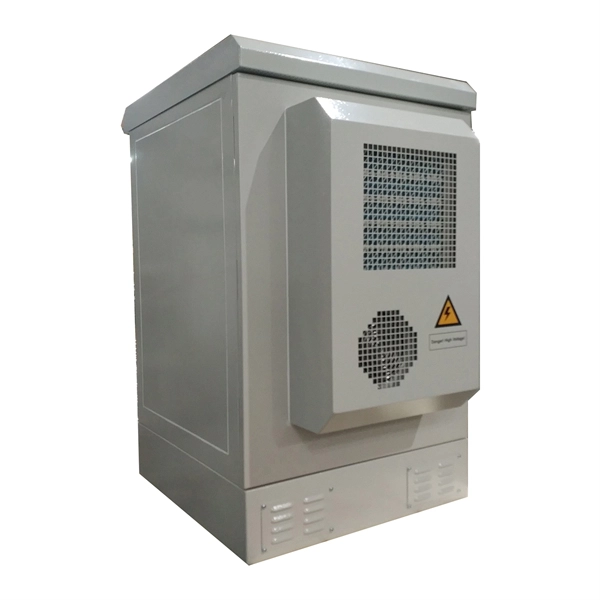
Grounding System Installation Standards for Distribution Boxes and
Whether you''re a seasoned pro or just starting out, this comprehensive guide will give you practical insights into proper grounding techniques, with a special focus on how selecting quality
Distribution System Grounding
Four‐wire systems are superior to three‐wire systems for serving single‐phase loads and are predominant in North America. In addition to safety, it is cheaper to build the system because a
1926.962
This section applies to grounding of transmission and distribution lines and equipment for the purpose of protecting employees. Paragraph (d) of this section also applies to protective grounding of other
DISTRIBUTION BOX
Each DISTRIBUTION BOX and controller must be grounded. On the US market, a 5.26 mm 2 (10 AWG) ground wire must be used, and in all other markets a 6 mm 2 must be used.
Does the Distribution Box Door Need Grounding? Safety Standards FAQ
Choose a dedicated grounding screw or clip —not a reused bolt or hinge. Run a separate copper wire (usually 12 AWG) from the door to the cabinet''s grounding bar.
29 CFR 1926.962 -
This section covers grounding of transmission and distribution lines and equipment when this subpart requires protective grounding and whenever the employer chooses to ground such lines and
Distribution System Grounding | part of Electric Power and Energy
National Electric Safety Code (NESC) is designed for primary part of the distribution system and has been adopted by law by most states and Public Service Commissions across the United States.
The installation requirements for the distribution box
Learn how to install a distribution box safely and correctly. Covers wiring, placement, standards, and expert tips for a compliant setup.
1926.405
Unless installed in a complete metallic raceway, each branch circuit shall contain a separate equipment grounding conductor, and all receptacles shall be electrically connected to the grounding conductor.
OSHA Grounding Requirements: Rules and Penalties
Learn what OSHA requires for electrical grounding in general industry and construction, and what violations can cost you.
Nine Recommended Practices for Grounding
Electrical Grounding Techniques Grounding and bonding are the basis upon which safety and power quality are built. The grounding system
Industrial Automation Wiring and Grounding Guidelines
The grounding-electrode system is at earth-ground potential and is the central ground for all electrical equipment and ac power within any facility. Use 8 AWG copper wire minimum for the grounding
The Basics of Grounding and Bonding
Article 250 of the NEC covers the grounding and bonding of electrical systems. By definition, as well as by function, grounding and bonding are not the same thing. However, they do work closely together
26 05 26 Grounding and Bonding Electrical Systems_06_15_16
Ground all equipment with insulated ground wires run in conduit with circuit conductors. Construct metal raceway systems to create an independent and redundant ground path bonded to the ground wire at
Control of Hazardous Energy (Lockout/Tagout)
Internal wiring on a piece of factory equipment electrically shorts, shocking worker who is repairing the equipment. Craft workers, electricians, machine operators, and laborers are among the millions of
National Electrical Code 2023 Basics: Grounding and Bonding Part 1
The Standard NFPA 780-2020 gives directions regarding grounding and bonding connections in lightning protection systems. Equipment grounding is the connection to the ground of
DUKE UNIVERSITY CONSTRUCTION STANDARDS 1
Introduction Grounding is utilized within electrical distribution systems to provide an alternative, low- impedance path around the electrical system for short circuit current to flow during a line to ground
1910.303
1910 Subpart S - Index Subpart Title: Authority for 1910 Subpart S Standard Number: 1910.303 Title: General.
This reference is intended for preliminary fiber and communications infrastructure research. Optical interface, fiber type, port or core capacity, electrical input and output, enclosure protection, cooling, installation limits and applicable standards must be verified for the specific project.